
When Uber Eats Won’t Pay: The Dangerous Insurance Gap Facing Delivery Drivers
If you drive for a food delivery service like Uber Eats, you might assume you’re covered in the event of a crash - especially while the app is on. But what if we told you there’s a critical gap in coverage that could leave you paying out of pocket after an accident?
We recently encountered a case that highlights this exact scenario:
A delivery driver had the Uber Eats app open and was waiting to accept an order. While sitting idle in their vehicle, they were involved in an accident. Neither Uber’s insurer nor the driver’s personal insurance would cover the property damage. Why? Because of a gray area that exists in delivery app insurance policies - one many drivers don’t even know exists.
In this post, we’ll explain why this happens, what rights drivers may have, and how our firm helps injured clients navigate this increasingly common insurance dilemma.
The App-On, No-Trip Problem: Who Covers You?
Uber Eats (and similar services like DoorDash or Instacart) structures their insurance coverage around what you're doing in the app. Here's how it breaks down:
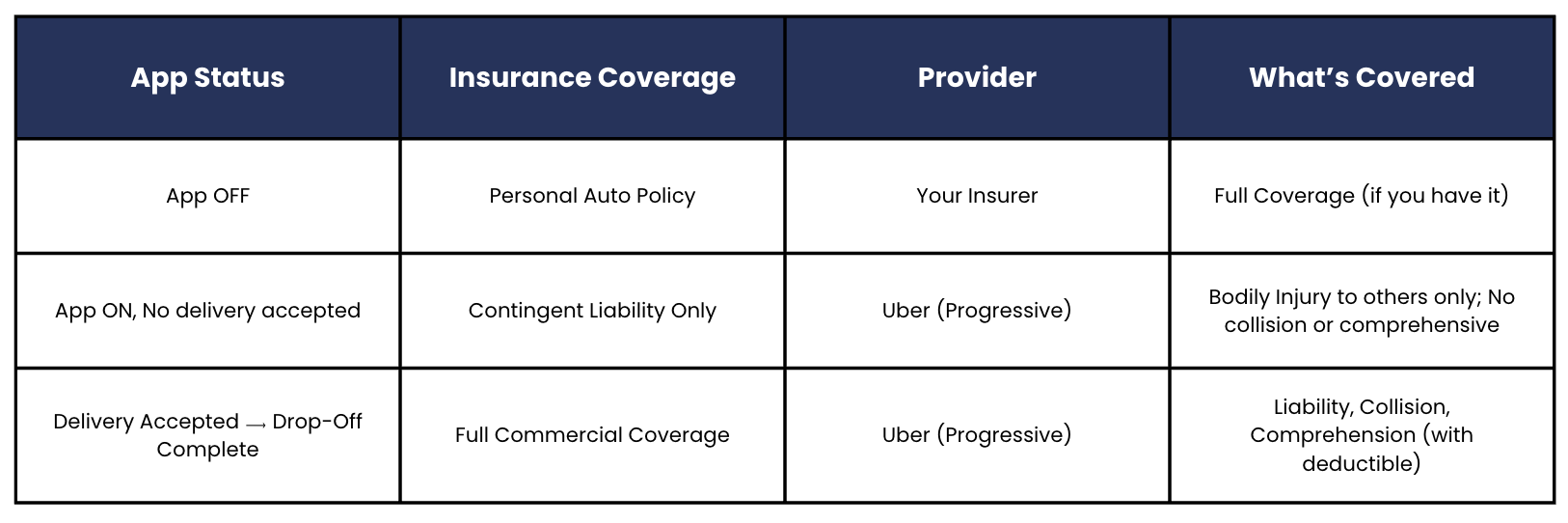
The gap appears when the app is on but you haven’t yet accepted a delivery. Uber’s policy provides limited coverage in this period: liability for injuries you cause to others - but nothing for damage to your own vehicle. And your personal insurance? Most carriers will deny coverage entirely if you’re using your vehicle for business, even if no delivery has started. This creates a dangerous “no man’s land” of insurance.
Why Insurance Denies These Claims
Here’s what typically happens in cases like this:
Uber’s insurer (often Progressive) tells the driver they weren’t actively on a delivery and denies property damage or collision claims.
The driver’s personal insurer (e.g., Mercury, State Farm, etc.) argues the driver was “working” at the time and invokes a business-use exclusion.
Result: No coverage from either side.
In our client’s case, Progressive confirmed to the personal insurer that the app was on and the driver was “available,” even though no order had been accepted. That one technicality was enough to void both policies.
It’s legally complicated - and incredibly frustrating for drivers who thought they were protected.
What This Means for Personal Injury Claims
If you’re a delivery driver injured in an accident - whether you’re waiting on an order or actively delivering - it’s critical to:
Understand your insurance status at the time of the crash.
Know who may be liable (especially in multi-vehicle accidents).
Get legal counsel early to protect your right to compensation.
Even if your own insurance coverage is in question, you may still have a claim against another at-fault driver. Our firm routinely investigates liability, evaluates policy language, and challenges denials from both commercial and personal insurers.
If you’ve been denied coverage due to this “waiting period” loophole, we may be able to help.
How Drivers Can Protect Themselves
Until laws catch up with gig economy realities, drivers can take proactive steps to reduce risk:
✅ Add a “rideshare” or “delivery” endorsement to your personal policy - many carriers offer this for a small monthly cost.
✅ Keep detailed records, including screenshots of your app status and order history.
✅ Report all incidents promptly and consult a legal professional before giving recorded statements to insurers.
We're Here to Help
At Win Nguyen Law, we represent delivery drivers and gig workers in injury and insurance disputes throughout Southern California. If you’ve been injured while using a delivery app - even if no delivery was accepted - don’t assume you’re out of options.
📞 Contact us for a free consultation. We’ll review your case, your insurance situation, and help you understand your legal rights.
